

Preparing for Your First Ceremony
August 24, 2026Preparing for Your First Ceremony
August 24, 2026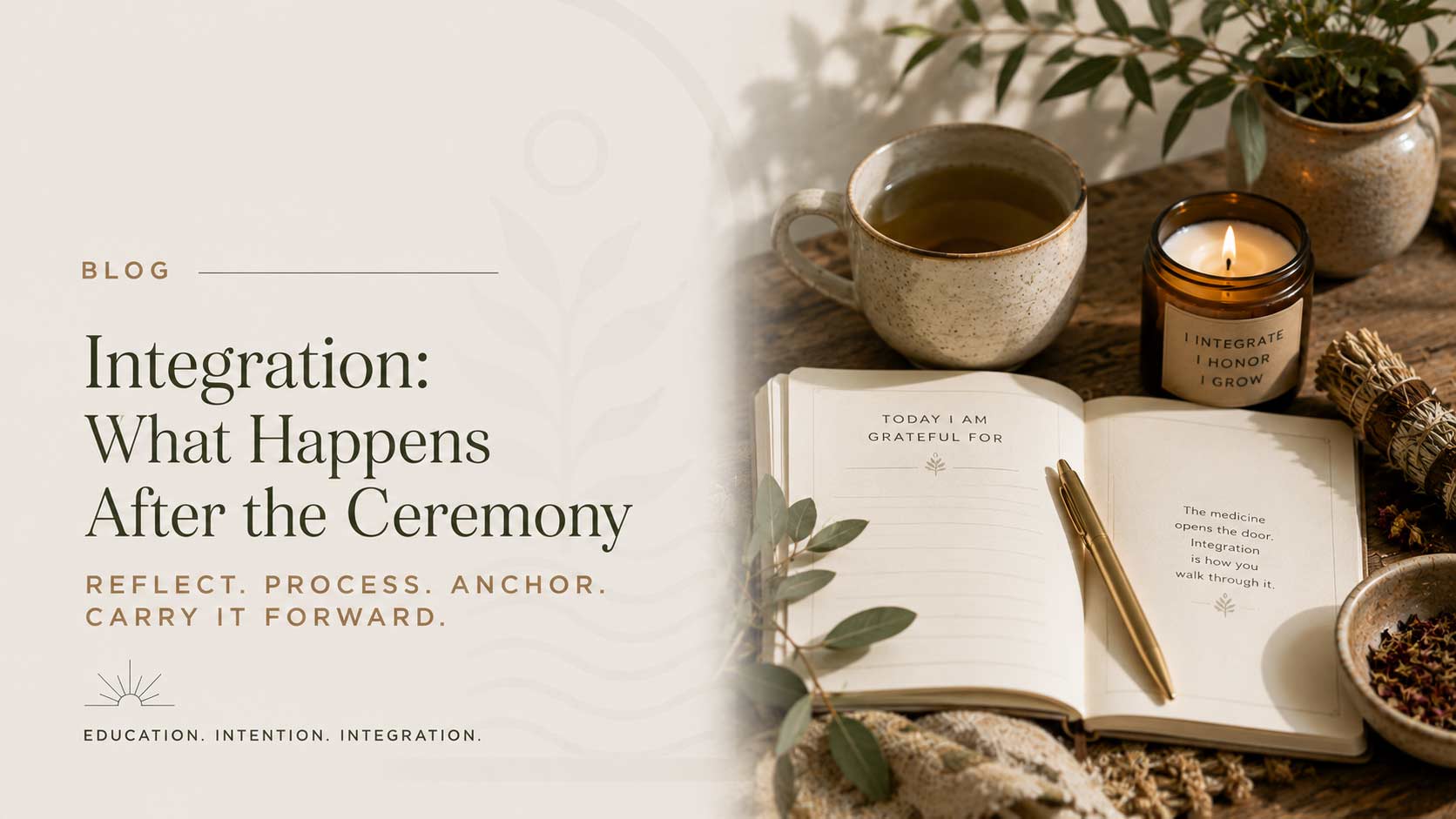
Ceremony & Practice
Integration: What Happens After the Ceremony
Why the days and weeks after ceremony matter more than the ceremony itself.
Here is the truth that the most beautiful ceremony stories often leave out: the ceremony is the beginning, not the end. What happens in the days, weeks, and months that follow — the unglamorous, ordinary work of integration — is where lasting transformation actually takes root. Integration is the most underappreciated part of this path, and arguably the most important.
A ceremony can crack something open. It can offer insight, release, a glimpse of who you are underneath the noise. But an insight that isn't integrated fades like a dream by mid-morning. Integration is how you carry it into your actual life.
What integration actually means
Integration is the practice of making meaning from an experience and weaving it into how you live. It's the difference between having felt something profound and becoming someone changed by it. It doesn't happen automatically, and it rarely happens quickly. It happens through attention, patience, and often through support.
The afterglow — and what follows it
Many people describe a luminous period immediately after a ceremony: everything feels clearer, softer, more connected. This “afterglow” is real and precious — and it is temporary. When it fades, as it always does, some people feel a quiet grief, as though they've lost something. This is normal. The work isn't to chase the afterglow back, but to translate what it showed you into steady, grounded change.
Tools that help
A few practices support integration well. Journaling — writing freely, without editing, especially in the first days. Time in nature, which seems to help the nervous system settle. Gentle movement and rest. And crucially, talking it through with someone who understands — a facilitator, a therapist, or a trusted guide. What arises after ceremony can be tender or disorienting, and you don't have to metabolize it alone.
Sometimes difficult material surfaces
Integration isn't always peaceful. Ceremony can stir up grief, memory, or emotion that needs somewhere to go. This is not a sign that something went wrong — it's often a sign that something is healing. Still, if what surfaces feels heavy or hard to hold, that is precisely the moment to reach out rather than withdraw. Support exists for exactly this.
At Lōkahi, every private ceremony includes integration support, because we believe the after matters as much as the during. The insight is the gift. The integration is how you keep it.
The information provided in this article is for educational purposes only and is not intended as medical advice. Lōkahi Sanctuary does not make medical claims. Our content and offerings are not intended to diagnose, treat, cure, or prevent any disease. Always consult your physician before making changes to your health regimen. Lōkahi Sanctuary is a Private Members Association operating under private and religious law.