How to Set Up a Home Altar for Your Practice
August 24, 2026
Preparing for Your First Ceremony
August 24, 2026How to Set Up a Home Altar for Your Practice
August 24, 2026Preparing for Your First Ceremony
August 24, 2026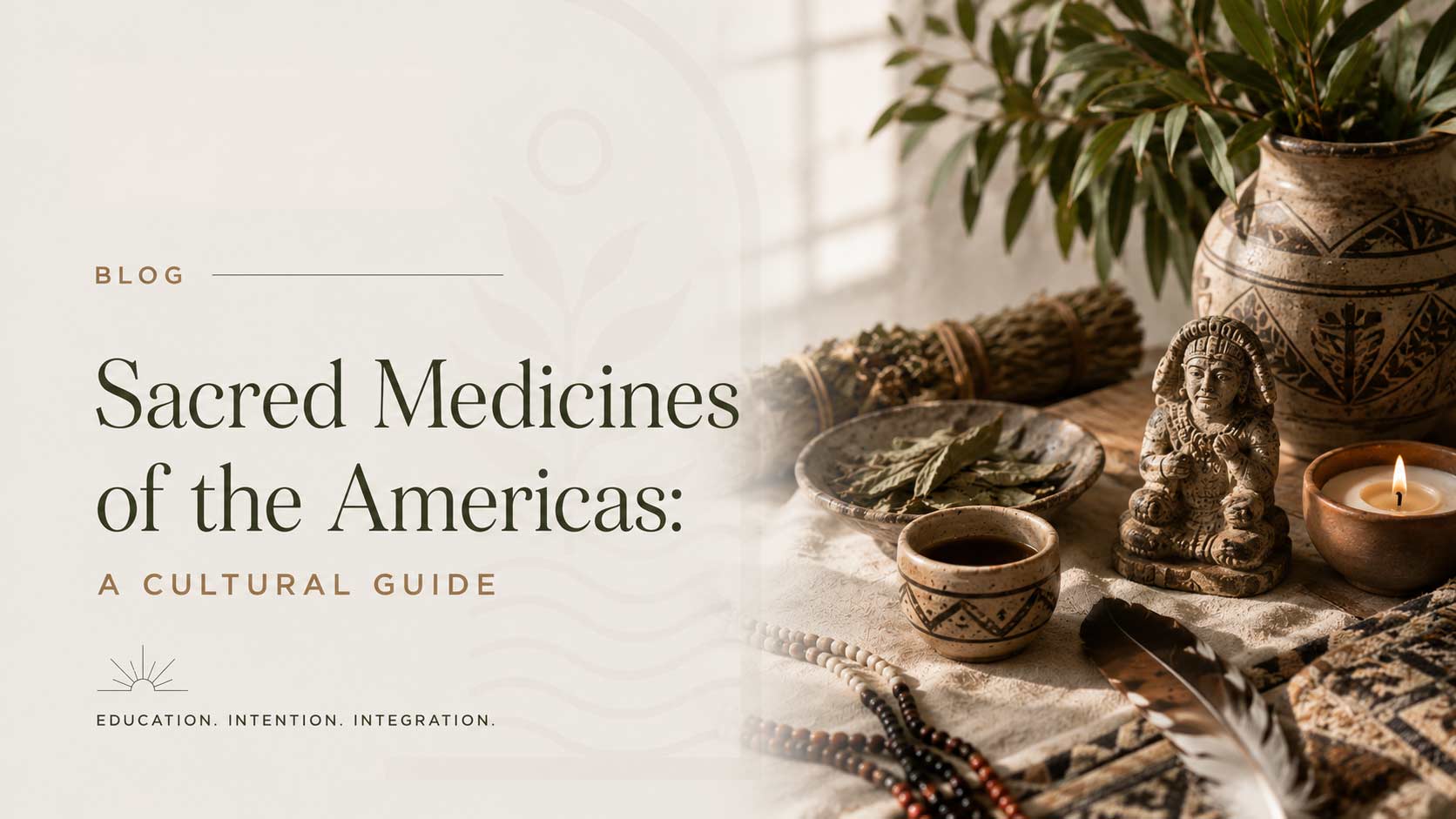
Sacred Medicines & Traditions
Sacred Medicines of the Americas: A Cultural Guide
The Indigenous lineages these medicines come from, and why honoring origin matters.
Long before there were clinical trials, before there was a word like “psychedelic,” these medicines were held in ceremony by peoples who understood them as teachers, not substances. To approach sacred medicine without knowing where it comes from is to take something without acknowledging the hands that carried it across centuries. At Lōkahi, that acknowledgment is not optional — it is foundational.
This guide is a beginning, offered with humility. It is not a substitute for the living traditions themselves, nor for the voices of the peoples who steward them.
Ayahuasca — the vine of the Amazon
Used for generations by Indigenous peoples of the Amazon basin, ayahuasca is a brew traditionally prepared and led by a trained curandero. It has been woven into healing rituals and spiritual practice as a means of gaining insight, connecting with the spirit world, and tending to ailments of body, mind, and spirit. Its ceremonies are long, often guided through the night by icaros — sacred healing songs. To honor ayahuasca is to honor the lineage of care that surrounds it.
Peyote — the sacred cactus
Peyote holds profound sacred significance for many Native American peoples, who have used it in ceremony for centuries for spiritual growth, healing, and connection with the divine. It is not a medicine to be approached casually or removed from its cultural context. We name this plainly: peyote is deeply sacred to living peoples, and any engagement with it must begin from respect for — and where possible, collaboration with — the traditions from which it comes.
Psilocybin mushrooms — the Mesoamerican lineage
Indigenous peoples of Mesoamerica have used psilocybin-containing mushrooms for centuries in religious ceremony, as a means of communicating with the spirit world and seeking spiritual insight. What modern science is now studying with great interest, these traditions have understood for a very long time: that these are medicines, and that the container of ceremony matters as much as the substance itself.
Honoring, not appropriating
There is a meaningful difference between learning from a tradition and taking from it. Honoring means acknowledging origins, resisting the urge to strip these medicines of their cultural and spiritual meaning, and — wherever possible — collaborating with Indigenous practitioners rather than around them. It means approaching as a guest, not an owner. This is the standard we hold ourselves to, and it is never finished; it is a continual practice of respect.
The information provided in this article is for educational purposes only and is not intended as medical advice. Lōkahi Sanctuary does not make medical claims. Our content and offerings are not intended to diagnose, treat, cure, or prevent any disease. Always consult your physician before making changes to your health regimen. Lōkahi Sanctuary is a Private Members Association operating under private and religious law.